If you work in Silicon Valley but want more breathing room at home, Gilroy is probably already on your radar. The big question is whether the extra space and different pace are worth the longer trip north. This guide will help you understand how Gilroy fits a commuter lifestyle, what kinds of homes you’ll find, and what daily life looks like once you are off the clock. Let’s dive in.
Why Gilroy Draws Commuters
Gilroy works best as a South County home base, not a close-in Silicon Valley suburb. The city sits at the crossing of US 101 and State Route 152, with Monterey Road serving as a major north-south route, so driving remains a major part of the commute for many residents.
That setup appeals to buyers who want a practical tradeoff. You may accept a longer and more schedule-sensitive commute in exchange for more detached-home options, larger lots, and a more traditional suburban housing pattern than you often see closer to the core Silicon Valley markets.
What the Commute Looks Like
For many buyers, the first thing to understand is that Gilroy is not a quick hop to major job centers. Census QuickFacts lists the mean travel time to work in Gilroy at 33.3 minutes, but your actual commute will depend heavily on where you work, what time you leave, and whether you drive, ride transit, or combine both.
Because Gilroy is a South County location, commute planning matters more here than it does in neighborhoods closer to San Jose. If you are considering a move, it helps to think in terms of a commute strategy, not just a map pin.
Driving remains central
Road travel is still the backbone of commuting from Gilroy. With direct relevance to local travel patterns, the city’s transportation materials highlight US 101, SR 152, and Monterey Road as key parts of the network.
If you work in San Jose or other Silicon Valley locations, driving may offer the most flexibility. It can also make your schedule more sensitive to traffic conditions, departure times, and day-to-day congestion.
VTA offers bus connections
Gilroy Transit Center gives commuters another option. VTA Route 68 and Rapid 568 both connect Gilroy Transit Center with San Jose Diridon, running through the Monterey corridor in South County.
For some buyers, that creates a useful middle ground between driving the entire way and relying on limited rail service. It may be especially helpful if you want a more predictable routine or prefer to avoid driving every day.
Caltrain is limited but useful
Caltrain’s South County Connector is the rail option most relevant to Gilroy commuters. Caltrain notes that South Santa Clara County passengers can use the connector from Gilroy and nearby stations, and that four weekday round trips continue between San Jose Diridon and Gilroy with a three-minute cross-platform transfer at Diridon.
That service can work well for some schedules, but it is not a frequent, all-day rail setup. If train access is important to you, it is smart to look closely at departure times and how they match your workday before you choose a home.
Housing in Gilroy: What Buyers Can Expect
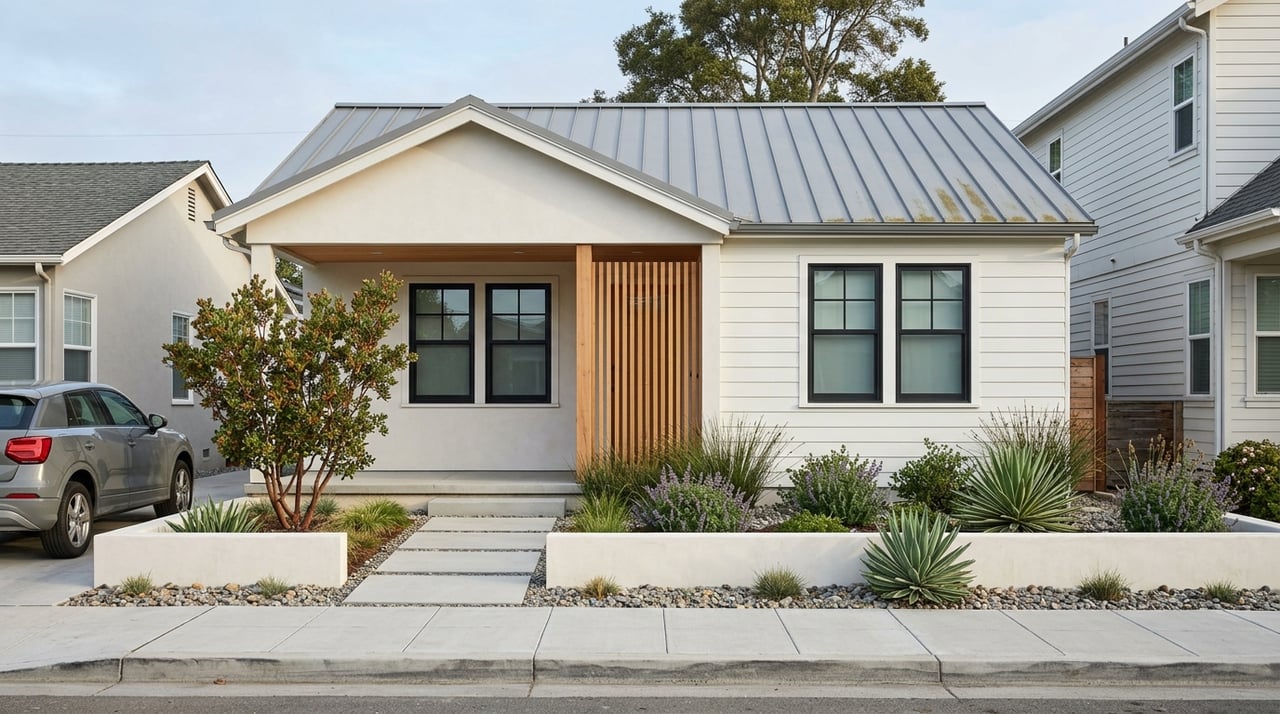
Gilroy’s housing stock is a big part of its appeal for Silicon Valley commuters. According to the city’s Housing Element, Gilroy had 16,826 housing units in 2021, and 69.8% were single-family detached homes.
That matters because many buyers moving from more central Silicon Valley markets are specifically searching for space. Gilroy has a much heavier share of detached housing than multifamily housing, which helps explain why it often stands out to buyers looking for a more conventional suburban home.
Detached homes lead the market
Single-family attached homes made up 5.3% of the housing stock, while multifamily accounted for 23.1% and mobile homes 1.9%. In simple terms, detached homes are the dominant housing type in Gilroy.
If your wish list includes a standalone home, a yard, or more separation from neighbors, Gilroy may offer more of the product you want. That does not mean every home is large, but it does mean the city’s overall housing mix leans strongly in that direction.
Lot sizes often support more space
The city’s land-use map notes that low-density residential is Gilroy’s most common residential designation. These areas are generally made up of single-family detached homes on lots typically ranging from 5,000 to 7,000 square feet.
For buyers comparing Gilroy with denser parts of the South Bay, that can feel like a meaningful shift. More lot space can support easier outdoor living, more parking flexibility, or simply a less compact neighborhood layout.
Other housing types are available too
Gilroy is not only detached housing. The city identifies medium-density residential areas for townhomes, condominiums, and apartment buildings, while higher-density areas are generally located near commercial areas, transit stops, schools, and parks.
That gives buyers a broader menu of choices. If you want lower maintenance or prefer to stay closer to services and transit, there are housing types beyond the traditional detached-home model.
A Quick Look at Costs and Local Context
Current Census QuickFacts lists Gilroy’s owner-occupied housing unit rate at 62.4%. The same source reports a median value of owner-occupied housing units of $1,027,400, median gross rent of $2,301, and median household income of $133,107.
Those figures help frame Gilroy as a higher-cost California market, but one that may still appeal to buyers who feel priced out of closer-in Silicon Valley locations. For many households, the value equation is less about getting a low-cost home and more about getting a different mix of space, housing type, and daily lifestyle.
Daily Life Beyond the Commute
A commuter city works better when your off-hours still feel enjoyable and convenient. Gilroy offers a meaningful amenity base that supports everyday living, not just a place to sleep between workdays.
That is important if you are balancing long work hours with family time, recreation, or simple day-to-day errands. You want a city that gives you reasons to enjoy being home.
Parks and trails support active routines
City materials say Gilroy has 14 neighborhood and community parks, a sports park, and more than 10 miles of trails. Parks are generally open daily, with longer summer hours, and San Ysidro and Las Animas remain open until 11 p.m. year-round.
For many buyers, that adds real lifestyle value. Whether you want a playground, walking route, picnic spot, or a place to unwind after work, the city has a park system that supports regular use.
Gilroy Sports Park adds more recreation
Gilroy Sports Park is a 79-acre site with baseball fields, a soccer field, a playground, trails, picnic tables, restrooms, parking, a grill, and a jogging path. It is a good example of the kind of larger recreational amenity that can help support active households.
If your week is busy, having these kinds of local options nearby can make weekends simpler. You do not always need to drive far to find space for exercise or downtime.
Downtown adds convenience and character
The city describes Downtown Gilroy as the heart of the community, with a walkable setting, historic charm, and an eclectic mix of restaurants, shops, services, and entertainment. The city also highlights free parking, transit access, and recurring events like the Third Friday Night Art Walk, the Downtown Live Music Series, the Garlic City Car Show, and La Ofrenda Festival.
For commuters, that kind of downtown matters. It gives you a place to meet friends, grab dinner, run errands, or enjoy local events without needing to head north for everything.
Dining supports everyday living
Visit Gilroy describes the restaurant scene as ranging from casual family fare to ethnic restaurants and gourmet cuisine. It also notes that garlic remains a signature local theme on many menus.
That variety helps make Gilroy feel like a complete home base. You are not choosing only a house and a commute. You are also choosing where you spend your evenings, weekends, and ordinary midweek moments.
Weekend Access Matters Too
Gilroy’s location can also work well for buyers who want regional flexibility. Gilroy Gardens Family Theme Park is in town, with more than 40 rides and attractions on a 75-acre site.
The park’s directions also place Gilroy about 30 miles from San Jose and about 30 miles from Santa Cruz and Capitola. That reinforces Gilroy’s position between the South Bay and the coast, which can be attractive if your life regularly pulls you in more than one direction.
East of town, Coyote Lake-Harvey Bear Ranch County Park covers 6,695 acres and includes a 449-acre lake along with hiking, biking, boating, camping, and fishing. For buyers who want access to outdoor recreation without a major planning effort, that is a meaningful plus.
Is Gilroy the Right Fit for You?
Gilroy tends to make the most sense if you want more detached-home inventory, relatively larger lots, and a suburban environment while staying connected to Silicon Valley job centers. It is a practical option for buyers who understand that they are trading commute convenience for more space and a different day-to-day feel.
It may be a strong fit if you are comfortable building your routine around US 101, VTA bus service, or limited Caltrain options. It may be less ideal if you want frequent rail service or the shortest possible trip to core Silicon Valley destinations.
The best move is to weigh the full picture. Your home, commute pattern, budget, and lifestyle all need to work together.
If you are thinking about buying in Gilroy or comparing it with other Santa Clara County options, Ted Mendoza can help you sort through the tradeoffs, narrow your search, and make a confident decision.
FAQs
Is Gilroy a good choice for Silicon Valley commuters?
- Gilroy can be a good fit if you want more space and more detached-home options and are comfortable with a longer, more schedule-sensitive commute than you would usually have closer to San Jose.
What transit options do Gilroy commuters have?
- Commuters can use VTA Route 68, Rapid 568, and Caltrain’s South County Connector, though rail service is limited and many residents still rely heavily on driving.
What kind of homes are common in Gilroy?
- Gilroy’s housing stock is mostly single-family detached homes, which made up 69.8% of the city’s housing units in 2021 according to the city’s Housing Element.
What is daily life like in Gilroy for homebuyers?
- Gilroy offers a solid local amenity base with parks, trails, sports facilities, a walkable downtown, restaurants, local events, and access to larger recreation areas.
How does Gilroy compare with closer-in Silicon Valley markets?
- Gilroy generally appeals to buyers who want more space and a more traditional suburban housing pattern, while accepting a longer commute than they would typically have in core Silicon Valley locations.